
Executive Coaching
Let's connect
Introduction
Why Executive Coaching?
As a leader, do you need a neutral but challenging sounding board in your personal and strategic growth process? Do you sometimes get feedback about the way you function? It may be about a learned skill that you are not yet putting into practice or about sharpening interpersonal skills that would enhance the fulfillment of your role. Then it may be good to clarify your personal motives and beliefs about this and adjust them where appropriate. It may be that you want to become an improved version of your true self. As an executive and c-level manager, we guide you in your personal and professional process and focus on effortless, sustainable and effective leadership. You get an honest and respectful mirror. We focus a critical and at the same time warm gaze on yourself as a professional and as a person, take stock of your personal qualities and blockages.

From there we map out a growth path together to expand your consciousness by reaching back to your own essence and connecting more strongly with your inner compass.
Methods
How Executive Coaching works?
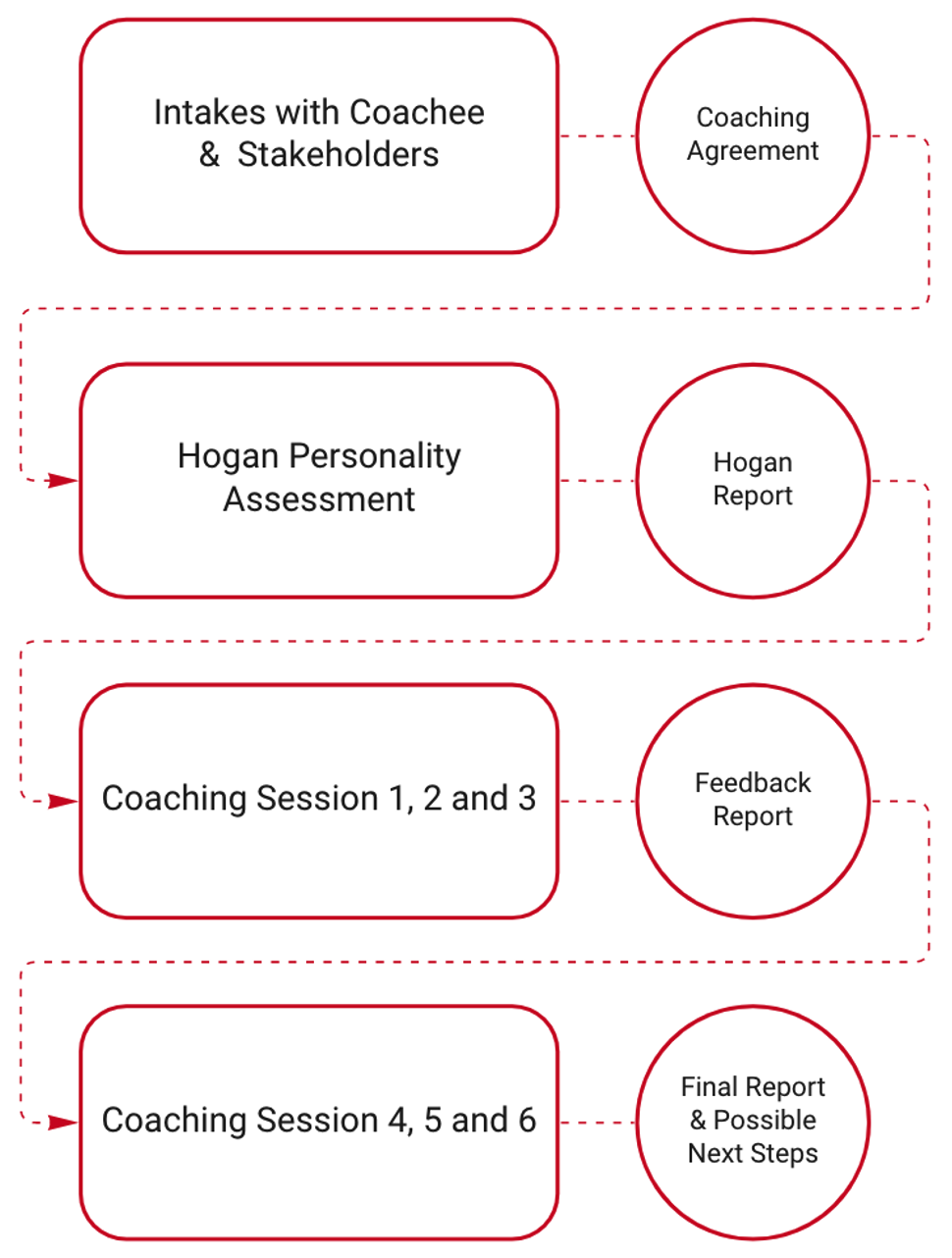
During an intake phase we will explore the topics that matter and describe desired results. Once those are agreed, the “journey” often goes like this (but can always by personalized).
Hogan Leadership Assessments are often used.

Outcomes
Measuring Outcomes
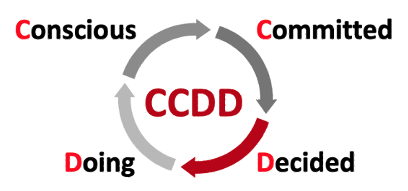
I developed the “CCDD” tool, for assessing and measuring the outcomes of your coaching, and your execution on them.
CCDD stands for: Conscious – Committed – Decided – Doing.
Exploring these four phases allows you to assess where you are on your pathway of executing on the outcomes.
- The decisions you took on your coaching journey.
- The way you are sustainably “doing”: taking action to deliver on your decisions.
- Thing may go different than expected in the doing-phase: which changes in consciousness or commitment may have caused that ?
- How to get back on track, or change the track if needed, to make sure you reach your outcomes.
Fundamental Work
The Practice of Presence
Presence.
A way of being.
For a successful executive.
On the journey to becoming a successful executive, it can be valuable and/or needed to work on your “executive presence”. The way your are present directly influences the impact you make.
In the field of “presence”, two teachers have inspired me: first Alan Seale with his work on “Transformational Presence”, and later Dr. Daniel Siegel. More specifically his “Wheel of Awareness”, the meditation that goes with it, and the science supporting it.
In his book, Aware: The Science and Practice of Presence, Dr. Siegel explains that there are research-based elements of mind training that should include 3 pillars:
- Focused attention
- Open awareness
- Kind intentions towards others.

1. The 5 Senses
2. The 6th Sense: bodily sensations.
3. The 7th Sense: mental activities.
4. Our sense of connection to others.
Turning this kind of meditation practice into a habit, will significantly strengthen your executive presence, and will allow you to evolve from “doing leadership” into “being a great leader”.

Publications
Evidence based coaching on some very actual topics. My books are always included.

Building Presence (Nl)
How fully “present” are you? How powerful is your presence? How does it help you to “sense” in the moment what to do? And to co-create with others ?
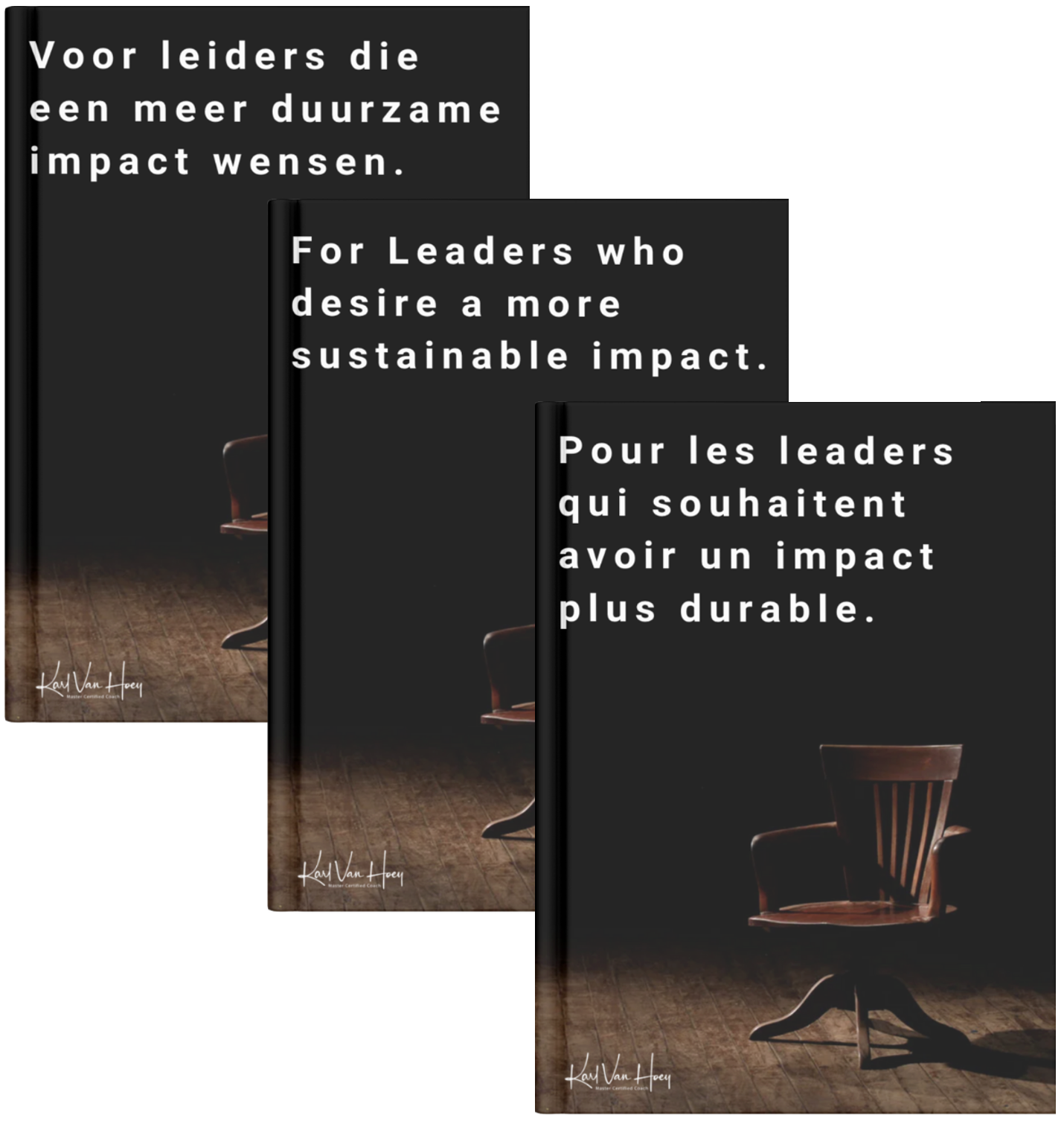
Sharpening Impact (Eng – Fr – Nl)
You may want or need to strengthen your impact? How much impact do you have on others? How sustainable is your impact? How do you know that for sure?
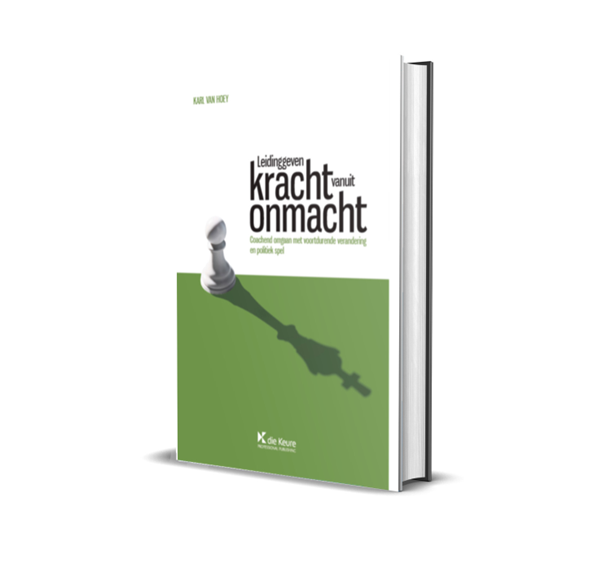
Leading Continuous Change (Nl)
Change is a continuous process, rather than a “project” needing to be “managed”. How successfully do you and your team navigate continuous change?